


PLANT OF THE MONTH - Wild Clematis

Latin name: Clematis vitalba
Height: Low-growing, scrambling plant
Conservation status: Common
Origin: Native to southern UK
Habitat: Hedgerows and low scrub, preferring chalky soil
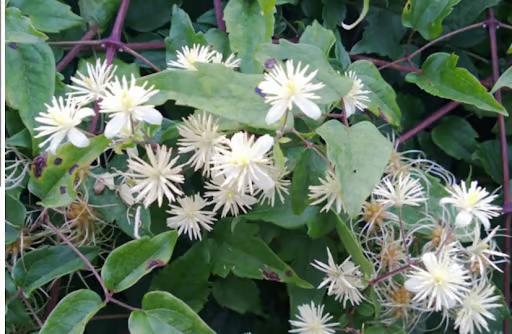
Appearance: Old Man’s Beard, part of the buttercup family, has compound leaves with three to five toothed leaflets. The white flowers, about 2 cm wide, appear to have petals but are actually sepals with large stamens. Its silky, feathery seed clusters, or achenes, give the plant its distinctive flowing look and name.
Ecology: A woody deciduous climber that can reach 30 m. Flowers are hermaphroditic and mainly insect-pollinated by bees and hoverflies. It blooms from July to September, with seed heads lasting through winter. Traveller’s Joy is a food source for moths such as the pretty chalk carpet, small waved umber, and small emerald, and provides food and nesting material for birds like goldfinches. Dense foliage also shelters small mammals and invertebrates.
Environmental impact: Seeds spread easily by wind. Fast-growing and sometimes invasive, it can outcompete other plants in woodlands, meadows, and chalk grasslands, where it may be removed during habitat management.
Common names, traditional medicine and folklore: Also known as Traveller’s Joy and Virgin’s Bower, the plant was said to protect travellers and bring luck, though bringing it indoors was considered unlucky. The name “Old Man’s Beard” may refer to God or the Green Man of folklore. Traditionally, it was used for its anti-inflammatory properties to treat skin irritations and stress.

Sources:

Comments